About the University of Osaka

History of the University of Osaka (UOsaka)

The University of Osaka (UOsaka) traces its origins to Tekijuku, a private “place of learning” founded by OGATA Koan in 1838. A scholar of Western medicine, OGATA established a private school and clinic in Kawara-machi, Osaka, where students studied Western medicine and medical practice.

Seven years later, Tekijuku was relocated to Kasho-machi, now 3 Kitahama, Chuo-ku, Osaka, where much of the original school building still remains. Tekijuku subsequently became an important center for vaccination research and cholera treatment. In 1846, OGATA established Jotokan, which became the first smallpox vaccination institution officially recognized by the Edo government in 1858.
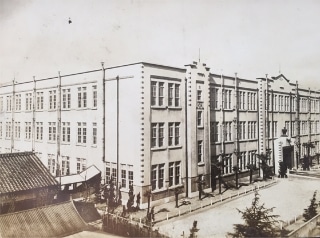
In 1869, with the support of OGATA Koan’s second son, Koreyoshi, together with OGATA’s former students and Dutch physician Anthonius Franciscus Bauduin the Meiji government established the Osaka Temporary Hospital and Osaka Medical School. In 1915, Osaka Medical School was renamed the Osaka Prefectural Medical School.

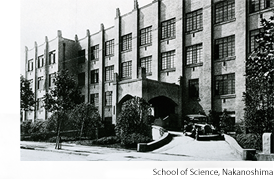
A major milestone came in 1931, when Osaka Prefectural Medical School officially became Osaka Imperial University, Japan’s sixth imperial university. The University initially consisted of two schools: Medicine and Science.

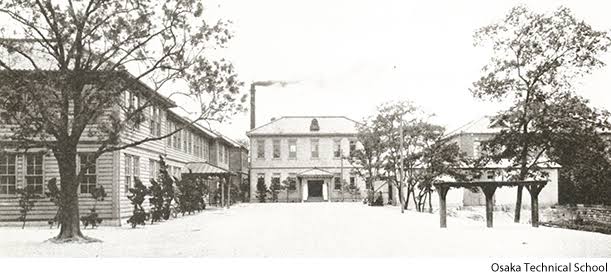
In 1933, the School of Engineering was added. Its origins can be traced to Osaka Technical School, a state industrial school established in 1896. With the addition of Engineering, Osaka Imperial University developed into a university comprising the schools of Medicine, Science, and Engineering.

Following World War II, Japan introduced a new educational system. In 1949, Osaka University was reorganized under the new school system with five schools: Letters, Law and Economics, Science, Medicine, and Engineering. Osaka Senior High School and Naniwa High School were subsequently abolished in 1950 and integrated into Osaka University, contributing to the development of the University’s liberal arts education.

On October 1, 2007, Osaka University integrated with the Osaka University of Foreign Studies, an institution with a distinguished history in foreign-language education and research. The integration brought together two institutions that shared a strong tradition of being established and supported through the efforts of the people of Osaka.

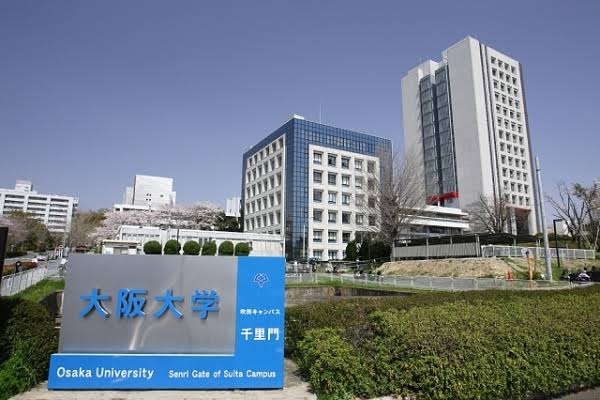
Today, The University of Osaka is a research-oriented comprehensive university operating across four campuses: Suita, Toyonaka, Minoh, and Nakanoshima. It comprises 11 undergraduate schools, 15 graduate schools, and 23 research centers and institutes, reflecting the breadth of its activities in education, research, and innovation.